car brake problems you should never ignore
Your brakes rarely fail without warning. They squeak, grind, vibrate or feel different under your foot long before they stop working properly. The problem is that most drivers learn to tune those signals out.
If you're looking into brake repair in Campbellfield, chances are something already feels or sounds off. Maybe it's a squeal at the lights on Sydney Road, or a pedal that sinks further than it used to. Either way, your car is telling you something.
Knowing what each symptom means helps you decide how urgently to act, what the likely fix is, and how to avoid paying for damage that never needed to happen.
What Is Brake Repair?
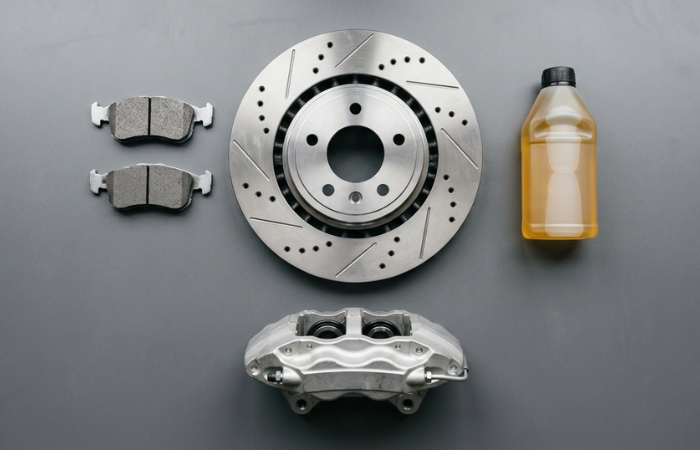
Brake repair is the process of inspecting, servicing and replacing the components that slow and stop your vehicle. It covers brake pads, rotors (also called discs), callipers, brake lines and brake fluid. A proper repair restores consistent stopping power, firm pedal feel and full control, so your car stops the way it was designed to.
Most brake work falls into three categories.
- Routine replacement of wear items like pads and fluid
- Repair of damaged parts like warped rotors or seized callipers
- Fault diagnosis for problems like a failed ABS sensor or a hydraulic leak
Think of brake pads like the soles of your work boots. They're designed to wear out. The goal isn't to make them last forever. It's to replace them before you're walking on the nails.
How Your Braking System Works
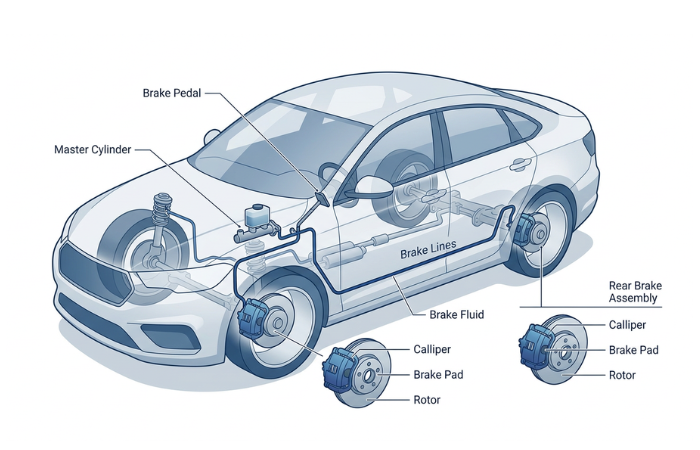
When you press the pedal, you aren't stopping the car with leg strength. You're starting a chain reaction.
- The pedal pushes a piston in the master cylinder.
- That piston pressurises the brake fluid in the lines.
- The fluid pushes pistons in the calliper at each wheel.
- The callipers squeeze the brake pads against the spinning rotors.
- Friction converts the car's movement into heat, and the car slows down.
Brake fluid doesn't compress, which is why a healthy pedal feels firm and predictable. When air or moisture gets into the system, that firm feel turns spongy.
Your ABS sits on top of all this. Wheel speed sensors detect when a wheel is about to lock, and the system rapidly pulses the brakes so you can keep steering during a hard stop.
Every one of those parts wears or ages. That's why brake symptoms vary so much. A noise usually points to pads or rotors. A pedal problem usually points to the hydraulics.
Why Brake Warning Signs Matter
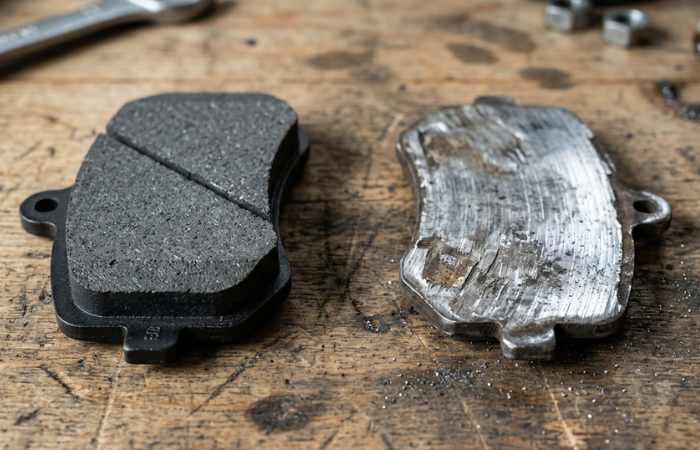
Brake warning signs matter because braking performance usually drops gradually, so you adapt to it without noticing. Worn pads, tired rotors and old fluid all add to your stopping distance. Ignoring early symptoms also makes the eventual repair bigger and more expensive. Acting early protects your safety and your budget.
Stopping distance is the obvious risk. Even a small loss of braking efficiency adds metres to an emergency stop, and on the Western Ring Road those metres matter.
Cost escalation is the one that catches people out. Here's how it usually plays out.
- Stage one. Pads wear thin and start squealing. A pad replacement fixes it.
- Stage two. Pads wear through to the metal backing plate. Now the rotors are scored and need machining or replacement.
- Stage three. Heat and damage spread to the callipers. Now you're replacing pads, rotors and calliper parts.
Same original problem. Three very different invoices.
There's a knock-on effect too. Uneven braking puts extra strain on your tyres and suspension, which shortens their life as well.
Warning Signs Your Brakes Need Attention
Squeaking or Squealing When You Brake
A high-pitched squeal is the most common early warning. Many brake pads have a small metal tab called a wear indicator. When the pad material wears down to a set point, the tab touches the rotor and squeals on purpose.
That noise is a reminder, not an emergency. Book an inspection soon rather than waiting for the sound to change.
Some squeaks come from glazed pads, low-quality pad compounds or missing anti-squeal shims. A mechanic can usually tell the difference within minutes.
Grinding or Growling Noises
Grinding is the sound you don't want to hear. It usually means the friction material is gone and the metal backing plate is scraping against the rotor.
At this point, every stop is damaging the rotors. Stopping power also drops because metal on metal doesn't grip the way pad material does. Treat grinding as urgent and limit your driving until it's checked.
A stone or piece of debris trapped between the pad and rotor can also cause grinding. Either way, the brake needs to come apart and be inspected.
Soft, Spongy or Sinking Pedal
Your brake pedal should feel firm and stop at a consistent point. If it feels soft, travels closer to the floor, or slowly sinks while you hold it at the lights, something is wrong in the hydraulic system.
Common causes include air in the lines, old moisture-contaminated fluid, a fluid leak or a worn master cylinder. Don't wait on this one. A sinking pedal can mean you're losing the pressure that stops the car.
Vibration or Pulsing Through the Pedal
If the pedal pulses or the steering wheel shudders when you brake gently, the rotors are the usual suspect. Uneven rotor thickness, often caused by heat or uneven pad deposits, makes the pads grab and release as the wheel turns.
A pulsing pedal during a hard emergency stop is normal ABS operation. A pulse during gentle, everyday braking isn't.
Measuring the rotors confirms whether they can be saved. Vibration can also come from worn components, so a check of your steering and suspension is worth doing at the same time.
Car Pulls to One Side When Braking
If your car drifts left or right under braking, one side is working harder than the other. A sticking calliper, a collapsed brake hose or contaminated pads on one side are typical causes.
Pulling can also come from uneven tyre pressure or wear, so it's worth ruling out your tyres as well. If the pull only happens when you brake, the brakes are the more likely culprit.
Brake or ABS Warning Light on the Dash
A red brake light can mean the handbrake is on, the fluid is low or there's a hydraulic fault. An amber ABS light means the anti-lock system has detected a problem, often a faulty wheel speed sensor.
Your normal brakes usually still work with the ABS light on, but you lose the anti-lock safety net in a hard stop. A car diagnostics scan reads the fault code and pinpoints the cause.
Low fluid is rarely the whole story. The level drops as pads wear or because of a leak. Topping it up without finding out why just hides the problem.
Burning Smell After Braking
A sharp, chemical smell after heavy braking or a long downhill run can mean overheated pads. If you notice it during normal driving, a calliper may be sticking and dragging the pad against the rotor.
If you see smoke or smell something strong, pull over safely and let the brakes cool. Get them checked before your next long drive.
Longer Stopping Distances
This sign is the hardest to notice because it creeps up slowly. If you find yourself pressing harder or braking earlier than you used to, your pads, rotors or fluid may be past their best.
Brake Symptoms Quick Reference
| Symptom | Likely Cause | Urgency | What to Do |
|---|---|---|---|
| Squealing | Pad wear indicator | Moderate | Book an inspection soon |
| Grinding | Pads worn to metal | High | Limit driving and book now |
| Soft or sinking pedal | Air, leak or old fluid | High | Stop driving and get it checked |
| Pulsing pedal | Uneven rotors | Moderate | Have rotors and pads inspected |
| Pulling to one side | Sticking calliper or hose | High | Book an inspection promptly |
| Red brake light | Low fluid or hydraulic fault | High | Check the handbrake, then book in |
| Amber ABS light | Sensor or ABS fault | Moderate | Book a diagnostic scan |
| Burning smell | Overheating or dragging calliper | High | Let brakes cool, then book in |
What Happens During a Professional Brake Inspection
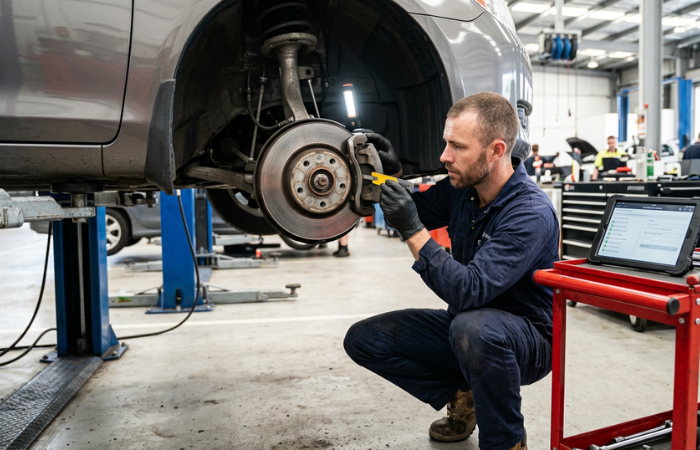
A professional brake inspection checks every part of the braking system, from pad thickness and rotor condition to calliper function, hoses and fluid quality. A good mechanic measures wear against manufacturer specifications, road tests the car and reads any warning light faults before recommending repair work.
Here's what a thorough inspection looks like, step by step.
- Road test. The mechanic drives the car to listen for noises and feel for pedal response, vibration and pulling.
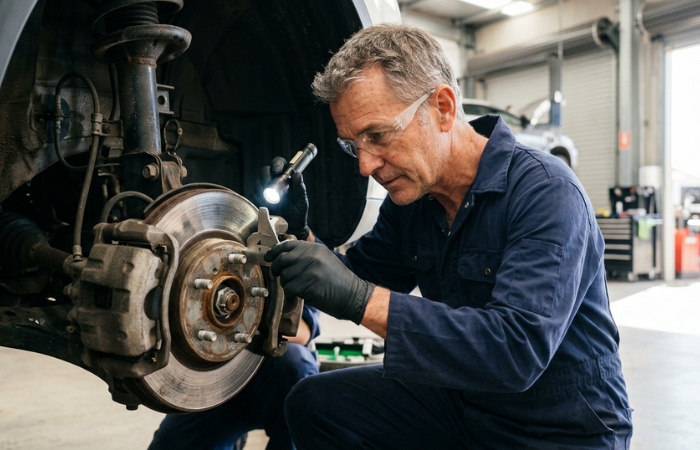
- Wheel removal. The wheels come off so the pads, rotors and callipers can be inspected directly.
- Pad and rotor measurement. Pad and rotor thickness are measured against the manufacturer's minimum specifications.
- Calliper and hose check. Callipers are checked for sticking or leaks, and hoses for cracks, bulges or seepage.
- Fluid test. Brake fluid is checked for level and moisture content, since contaminated fluid boils at a lower temperature.
- Fault scan. If a warning light is on, the ABS and brake system codes are read.
- Report and quote. You get a clear summary of the findings and a quote before any work starts.
That last step matters. A good workshop separates "replace now" from "keep an eye on it", so you can plan instead of panic. RR Auto Group's brake and clutch repairs start with exactly this kind of inspection.
How to Check Your Brakes Between Services
You don't need tools or mechanical knowledge to catch most problems early. A two-minute check once a month is enough.
- Listen. Drive slowly down a quiet street with the radio off and a window down. Note any squeal, grind or click when you brake.
- Feel the pedal. With the engine running and the car stationary, press the pedal firmly. It should stop at a consistent height and hold there.
- Look through the wheels. On many alloy wheels, you can see the pad sitting against the rotor. If the pad looks very thin, book a check.
- Check the fluid reservoir. Under the bonnet, the brake fluid should sit between the MIN and MAX marks. Fresh fluid is usually light amber, while dark fluid is due for a change.
- Watch the dash. Note any brake or ABS light that stays on after start-up.
If anything seems off, book it in rather than trying a DIY fix. Brakes aren't the system to experiment on.
How Often Should You Get Your Brakes Checked?
Most drivers should have their brakes checked at every scheduled service, or at least once a year. Brake fluid is commonly replaced around every two years, though your logbook sets the exact interval. Heavy stop-start traffic, towing and hilly driving wear brakes faster, so check them more often if that's your routine.
Driving around Campbellfield and the northern suburbs often means stop-start traffic on Sydney Road and the Hume Highway. That kind of driving is hard on pads. Sticking to your logbook service schedule keeps brake checks on the calendar so they don't get forgotten.
Regular servicing is also one of the easiest ways to catch brake wear before it turns into a breakdown, which is why local drivers who service early tend to spend less on repairs over time.
Frequently Asked Questions
Why Do My Brakes Squeak in the Morning?
Overnight moisture forms a thin layer of surface rust on the rotors, especially after rain or a humid night. The first few stops scrub it off, and the noise usually disappears. If the squeak continues once the car has warmed up, pad wear is the more likely cause.
Do I Need New Rotors Every Time I Replace Brake Pads?
Not always. If the rotors are above minimum thickness and wearing evenly, they can often be reused or machined. Rotors that are scored, warped or below specification should be replaced so the new pads bed in properly and brake evenly.
How Long Do Brake Pads Last?
It depends on your car, the pad type and how you drive. Many pads last somewhere between 30,000 and 70,000 km, but heavy stop-start driving can wear them out much sooner. Regular inspections give a more reliable answer than the odometer.
Will Worn Brakes Fail a Roadworthy Certificate in Victoria?
Yes, brakes are one of the key items assessed in a Victorian roadworthy inspection. Worn pads, damaged rotors, fluid leaks or an active warning light can all lead to a fail. Sorting brake issues before the inspection saves you a second visit.
How Long Does a Brake Repair Take?
A standard pad replacement on most cars is typically done within one to two hours. Jobs involving rotors, callipers or a fluid flush take longer, depending on parts availability. Booking ahead helps the workshop have the right parts ready for your vehicle.
Your Next Stop Should Be a Brake Inspection
Brakes give you plenty of warning. Squeals, grinding, a soft pedal or a shuddering wheel are all your car asking for attention before a small fix becomes a big one. The earlier you listen, the cheaper and safer the outcome.
RR Auto Group's mechanics inspect and repair pads, rotors, callipers, brake fluid and ABS systems on all makes and models, including European brands like BMW, Audi and Mercedes-Benz. Drivers from Campbellfield, Fawkner, Craigieburn, Epping and surrounding suburbs can have brake problems diagnosed and fixed under one roof, alongside servicing and other mechanical repairs.
Contact us to book a brake inspection and drive with confidence, knowing your car will stop when you need it to.